Weather, the crossing and the fort
Aran Islands ferry and Dún Aonghasa
How the Aran Islands crossing works, what weather cancels a sailing, how to read Met Éireann's marine forecast, and what to expect at Dún Aonghasa.
See Aran Islands trips on GetYourGuide ↗Quick answer
Rain doesn't cancel the ferries, but rough sea or weather conditions can, and the operator then refunds you or moves you to the next sailing. Crossings take roughly 15 to 55 minutes depending on the route. Dún Aonghasa is a 1 km walk over rough rock from its visitor centre, with no barrier at the cliff edge. Wear layers, a rain shell and strong shoes, and carry a little cash.
Getting to the boat
The ferries to the Aran Islands carry passengers but not cars, so a car stays on the mainland. Bicycle space on board is limited and best pre-booked. Most routes start at Rossaveel, 37 kilometres west of Galway city centre, where the car park needs no pre-booking. If you drive, the operator advises arriving 30 minutes before departure. If you take its shuttle bus from Galway city, arrive at least 90 minutes before the sailing, which is 30 minutes before the bus leaves. In season there are also sailings from Doolin in County Clare. Flights also run from Connemara Airport near Inverin if you prefer to fly.
The sea crossing
From Rossaveel the sailing takes about 40 minutes to Inis Mór, 50 to Inis Meáin and 55 to Inis Oírr. From Doolin it takes about 15 minutes to Inis Oírr, 25 to Inis Meáin and 35 to Inis Mór. The seasonal sailing from Galway city docks to Inis Mór takes about 90 minutes and includes the Cliffs of Moher. There are refreshments on board, and Doolin's ferries have indoor seating and toilets. The Doolin company says the Atlantic can be like glass one day and choppy the next. If you are prone to motion sickness, it suggests tablets before departure and a seat in the outside area.
What weather cancels a sailing
Rain alone doesn't stop the ferries. The Doolin company says its ferries will not be cancelled because of rain. Sea and wind are what count. Aran Island Ferries gives a full refund, or a place on the next available sailing, if it cancels for adverse sea or weather conditions. Under its own policy you get no refund if you cancel yourself inside 24 hours. The operator makes the call, so no forecast can tell you for certain that your sailing will run. Allow slack, especially if you have a flight or a train the same evening.
Reading the marine forecast
Met Éireann, the Irish national weather service, publishes a sea area forecast four times a day and gives wind as a Beaufort force. On its scale, force 5 is a fresh breeze with moderate waves and a chance of spray, force 6 is a strong breeze with large waves, and force 7 is a near gale with the sea heaping up. It issues a small craft warning when force 6 is expected up to 10 nautical miles offshore. For the islands themselves it offers a 10-day hourly forecast covering the Connacht and Munster islands. Use it to judge what to wear and how lively the crossing may be, not to predict whether the ferry runs.
What to wear and bring
The Doolin company says the west coast of Ireland is famous for having all four seasons in one day. Its advice is layers: a short-sleeved shirt, a jumper and a lightweight rain shell, plus proper footwear if you plan to walk or climb. The Rossaveel operator suggests a camera, comfortable shoes, a good rain jacket, sun screen and a little cash, because some island businesses don't take cards or set a minimum spend. On deck you are in the open wind, so keep your jacket within reach.
Bikes, dogs and bags
Bikes can go on the Rossaveel ferries, but space is limited, so the operator wants it reserved when you buy your ticket. It doesn't carry electric bikes, bikes over 15 kg, luggage trolleys or bike trailers. Doolin takes bicycles only for overnight stays. Most day-trippers rent on the island instead: the Rossaveel operator mentions rental on Inis Mór, and Heritage Ireland lists bicycle hire, private buses and horse carriages at the port in Cill Rónáin. Dogs travel on a lead, and on the Rossaveel ferries they stay on the outside deck. Each passenger may bring one large bag up to 20 kg and one small bag up to 10 kg.
Dún Aonghasa: the walk and the edge
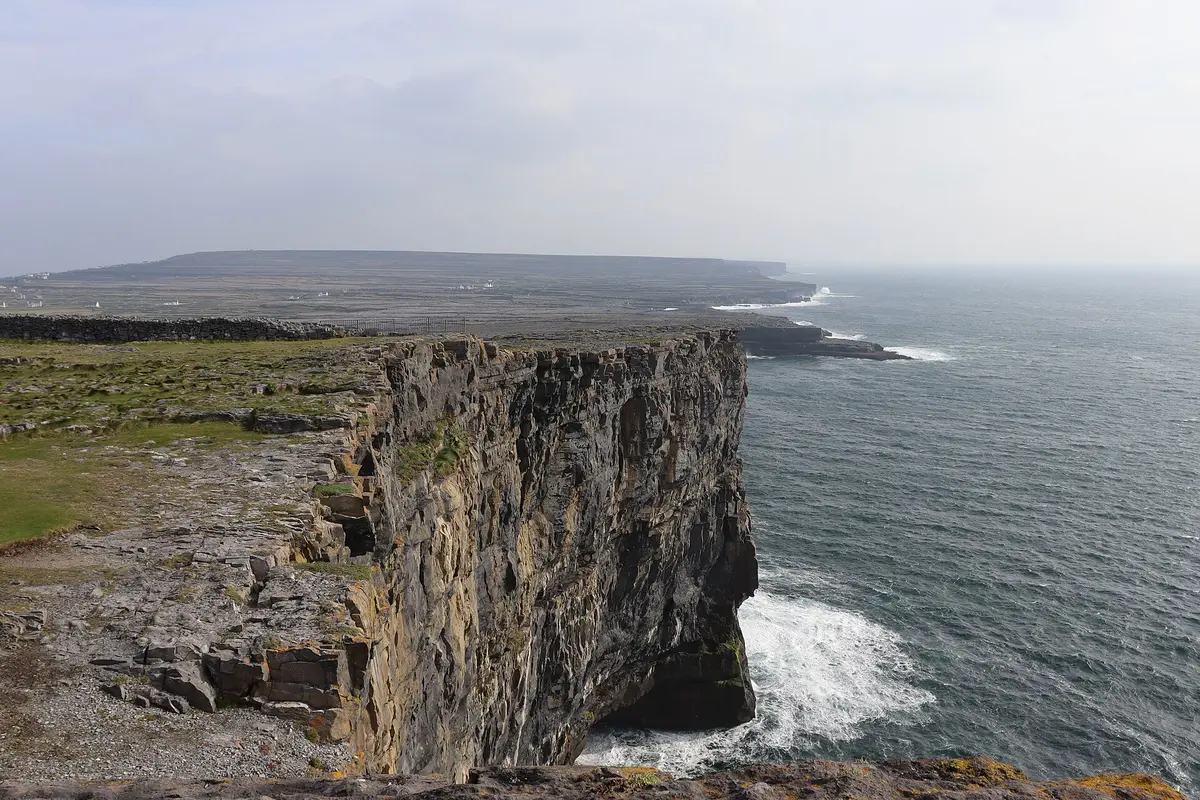
Dún Aonghasa is on Inis Mór, 7 km west of the port at Cill Rónáin. Heritage Ireland runs a visitor centre at the start of a 1 km walk to the fort. The route climbs over rising ground, and the last section is rough natural rock where care is needed, especially going down. Boots or strong walking shoes are recommended. Heritage Ireland states that there is no fence or barrier at the edge of the 87-metre drop. Dogs must be on a lead and drones aren't permitted. It lists uneven walkways and challenging access, and gives an average visit as one to one and a half hours.
What you are looking at
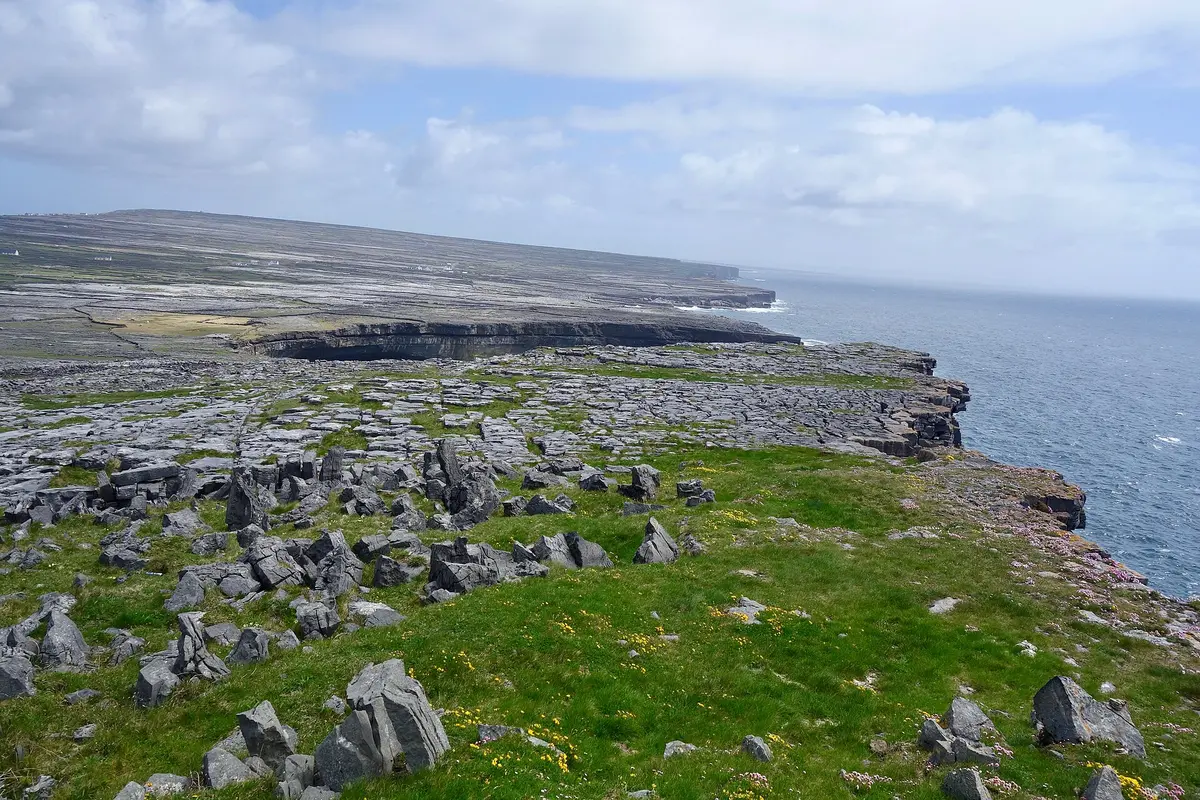
Three massive dry-stone walls enclose the fort. Outside them is a band of jagged upright stones, the chevaux-de-frise, that surrounds the fort from cliff to cliff. Heritage Ireland says the site is over 3,000 years old, that excavations found evidence of prehistoric metalworking, houses and burials, and that the whole complex was refortified in AD 700 to 800. Admission to the fort is charged separately, and the visitor centre's opening hours change by season, so check the Heritage Ireland page for your date. Ferry tickets don't cover fort admission unless the option says so.
Language, names and cash
The islands are part of the Gaeltacht, where Irish is the main language, and most residents are also fluent in English, so you can get by in English. The operators give both the Irish and the English forms of the names: Inis Mór is Inishmore, Inis Meáin is Inishmaan, Inis Oírr is Inisheer, Cill Rónáin is Kilronan, and Ros an Mhíl is Rossaveel. Learn both and you can follow any booking page, map or ferry notice. Cards aren't accepted everywhere on the islands, so carry a little cash.
Who this isn't for
This trip isn't for anyone who needs a step-free route. Dún Aonghasa is listed with uneven walkways and challenging access, the Rossaveel ferries can't carry electric wheelchairs, and the Rossaveel pontoons and island piers change with the tide, so the operator can't always accommodate wheelchair users. Doolin's harbours are likewise not wheelchair friendly. Contact the operator before you book. It also isn't for anyone uneasy about heights, because the cliff edge has no barrier, or for anyone who needs a guaranteed sailing, because sea conditions can cancel one.
Frequently asked questions
Does rain cancel the Aran Islands ferry?
No. Rain alone doesn't cancel it; the Doolin company says its ferries won't be cancelled for rain. Sea and weather conditions can. Aran Island Ferries refunds you or moves you to the next sailing if it cancels for adverse conditions.
How long is the Aran Islands ferry crossing?
From Rossaveel it takes about 40 minutes to Inis Mór, 50 to Inis Meáin and 55 to Inis Oírr. From Doolin it takes about 15 to 35 minutes. The sailing from Galway city docks to Inis Mór takes about 90 minutes.
Is there a fence at the edge of Dún Aonghasa?
No. Heritage Ireland states that there is no fence or barrier at the edge of the 87-metre drop. Stay back from the edge, take extra care in wind or rain and with children, and wear strong shoes.
How far is Dún Aonghasa from the harbour?
Heritage Ireland places it 7 km west of Cill Rónáin, the Inis Mór port. From the visitor centre it is a 1 km walk over rising ground and rough rock. An average visit takes one to one and a half hours.
Can I take a car to the Aran Islands?
No. The ferries carry passengers but not cars. Leave the car at Rossaveel, where the car park needs no pre-booking, or at Doolin, or use the shuttle bus from Galway city to Rossaveel.
What if I get seasick?
The Doolin company says the Atlantic can be unpredictable and suggests anti-motion-sickness medication before departure and a seat in the outside area. Check the Met Éireann sea area forecast before you go.
Sources